












Drug And Alcohol Rehab In Arlington WA
Table of Contents
Drug and Alcohol Rehab in Arlington, Washington: Your Questions Answered
When you’re looking for drug and alcohol rehab in Arlington WA, having clear answers makes the first step toward recovery easier. Below we address the most common questions we receive at Alpine Recovery Services.
What rehab options are available in Arlington, Washington?
We provide structured outpatient care right here in the community, including a Partial Hospitalization Program (PHP) — often searched as php arlington wa — an Intensive Outpatient Program (IOP), and individual counseling. For local drug rehab arlington wa residents can access through Alpine Recovery Services Arlington, treatment is designed to fit into your work and family life.
Does Alpine Recovery Services accept insurance?
Yes. We accept most major insurance providers and offer a free, confidential benefit verification. This straightforward process helps you understand your coverage for alcohol rehab in arlington wa before beginning arlington drug rehab, so there are no surprises. Results vary, and we encourage you to reach out for a custom quote — Reclaim Your Life with a team that has served this community since 1992. You Are Worth It!
This information is not medical advice. Call 911 for emergencies.
Cost and Insurance Questions for Rehab in Arlington
Navigating the cost of treatment is a common concern for anyone seeking drug and alcohol rehab in Arlington WA. At Alpine Recovery Services, we believe financial barriers should never stand between you and the care you need. According to the Substance Abuse and Mental Health Services Administration (SAMHSA), insurance coverage for substance use treatment is widely available under the Affordable Care Act, and many plans include benefits for outpatient services. Our team has been helping local residents verify those benefits since 1992, making the process simple and confidential.
Getting started begins with a free, no-obligation insurance check. When you contact our admissions team, we collect only the essential information from your insurance card. We then work directly with your provider to determine exactly what your plan covers for an Arlington drug rehab program. Within a short time, you receive a clear breakdown of covered services, any applicable co-pays, and whether pre-authorization is needed. This transparent step removes the guesswork so you can focus on what matters most — your recovery.
We accept most major insurance providers and are committed to helping you maximize your benefits. If you’re considering alcohol rehab in Arlington WA, our team will handle all the paperwork and coordinate with employers, attorneys, or medical professionals who may be involved in your referral. Beyond traditional insurance, we also explore every financial option available for PHP in Arlington WA and outpatient services. After verification, we provide a customized quote that outlines any potential out-of-pocket costs — but only then do we discuss numbers, ensuring you have facts before making a decision.
We know that cost questions can feel overwhelming, but help is just a phone call away. Our experienced staff will walk you through the entire insurance process, answer your questions, and confirm what your policy covers before you ever walk through our doors. There are financial paths to get the treatment you deserve. Contact Alpine Recovery Services today for a confidential benefit verification and take the first confident step toward reclaiming your life. Results may vary; individual outcomes are not guaranteed. This information is for educational purposes and is not a substitute for professional medical advice.
The Process of Starting Rehab in Arlington, Washington
Once you decide to seek help, the next step is understanding exactly how to begin. For those considering drug and alcohol rehab in arlington wa, starting drug rehab arlington wa at Alpine Recovery Services begins with a simple, confidential phone call. Our team has guided Arlinton residents through this supportive admissions process since 1992, making it as straightforward and stress-free as possible.
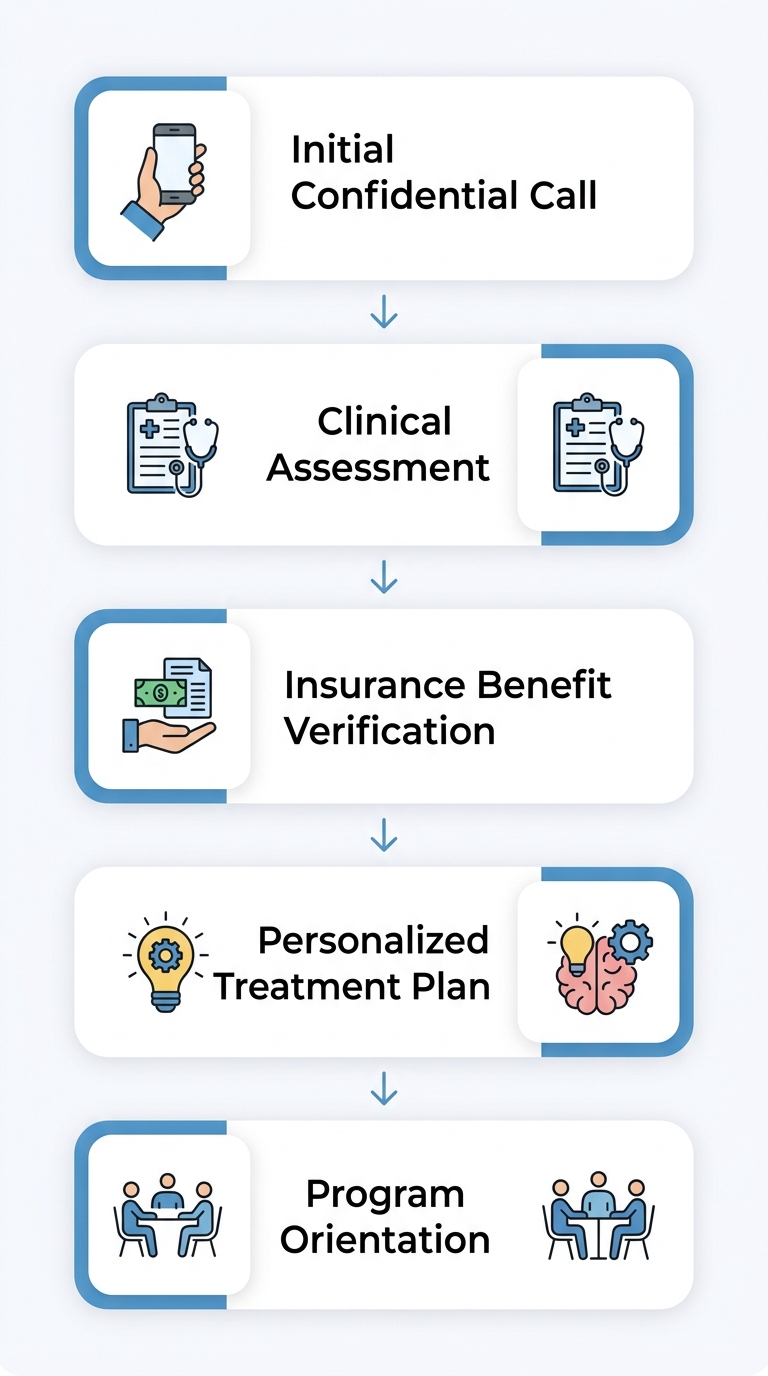
Five-step admission flow for outpatient addiction treatment
Step 1: Initial Contact and Confidential Assessment
Your journey starts with a confidential, no-obligation phone call. A front-desk or clinical intake specialist will listen to your needs and schedule a 30- to 60-minute assessment with a licensed clinician. During this conversation, we explore your substance use history, mental health, and personal recovery goals. This step is designed to be a compassionate guide through the arlinton drug rehab admission steps, helping you feel heard and understood from the very first moment.
Step 2: Insurance Verification and Scheduling
Once the assessment is complete, our team immediately contacts your insurance provider on your behalf to verify benefits. We accept most major insurance plans, striving to eliminate financial uncertainty so you can focus on your recovery. For those entering our alcohol rehab in arlington wa, we then recommend the appropriate level of care–whether Partial Hospitalization Program (PHP) or Intensive Outpatient Program (IP)–and schedule an intake day that works with your life. This collaborative step often occurs within the same call or shortly after.
Step 3: Intake and Personalized Program Design
Your intake day begins with a thorough welcome and the creation of a truly individualized treatment plan. Drawing on clinical assessment results, our team tailors a strategy using evience-based therapies such as Moral Reconation Therapy, relapse prevention, and group counseling. Whether you are stepping into our php arnngton wa program or a flexible IOP schedule, the plan is built around your unique needs, work, and family responsibilities. No two recovery journeys are alike–yours will be designed just for you.
Step 4: Orientation and Program Start
A smooth orientation helps you settle in with confidence. We review program rules, daily schedules, HIPAA and 4 CFR Part 2 privacy policies, and introduce you to the clinical team who will support you. Our goal is to make you feel safe, informed, and ready. You Are Worth It! This entire process–fom first call to program start–can often be completed within 48 hours, but the pace is always guided y our readiness.
Alpine Recovery follows admission protocols designed in accordance with Substance Abuse and Mental Health Services Administration (SAMSA) guidelines for entering treatment, underscoring our commitment to quality care. After orientation, you will be ready to fully engage in your personalized program–let’s explore what each level of care looks like. Get Help That Will Last and Reclaim Your Life here in Arlinton. Results may vary and individual outcomes are not guaranteed.
Licensing and Evidence-Based Standards in Arlington Rehab
Choosing a drug and alcohol rehab in Arlington WA involves evaluating far more than location or amenities. A truly effective program is built on rigorous licensing and evidence-based standards that safeguard your recovery journey. At Alpine Recovery Services, we have maintained Washington State licensure and The Joint Commission accreditation since our founding in 1992, providing every client with the assurance that treatment is delivered safely, ethically, and in alignment with the highest clinical benchmarks. The Substance Abuse and Mental Health Services Administration (SAMHSA) defines and promotes the evidence-based modalities we rely on, including cognitive-behavioral therapy, motivational interviewing, and medication-assisted treatment when clinically appropriate.
Following SAMHSA guidelines means every level of our outpatient care incorporates interventions that research consistently validates. As a trusted arlington drug rehab center, we embed these standards directly into our Partial Hospitalization Program and Intensive Outpatient Program so that adults in Arlington, Washington receive structured, goal-oriented support. Clients who step into php arlington wa engage daily therapeutic hours that draw on Moral Reconation Therapy, relapse-prevention frameworks, and coordinated family support, all while managing the responsibilities of work or school. The same evidence-based lens shapes our alcohol rehab in Arlington WA track, where motivational interviewing and continuing-care planning help individuals build resilience beyond the treatment episode.
Every aspect of Arlington drug rehab and drug rehab Arlington WA we deliver is informed by SAMHSA’s quality-improvement model, which emphasizes measurable progress rather than guarantees. Results vary and individual outcomes are not assured, but our commitment to proven protocols maximizes the potential for lasting recovery. You Are Worth It — and choosing a program grounded in licensing and evidence is the first step toward reclaiming your life.
Timeline and Duration of Rehab Programs in Arlington
The path to recovery through drug and alcohol rehab in Arlington WA is built on a personalized timeline, with each phase carefully structured to match your clinical needs. At Alpine Recovery Services, we design our outpatient programs to provide intensive support while allowing you to maintain your daily responsibilities, and understanding typical durations helps you prepare for the journey ahead.
A Partial Hospitalization Program in Arlington, often referred to as PHP Arlington WA, generally spans 4 to 6 weeks. This level of care involves daily therapeutic sessions, providing a high degree of structure and clinical support. Clients participate in full days of treatment at our Arlington drug rehab center and return home in the evenings, making it an ideal step-down from residential care or a robust starting point for those needing significant daytime support. Our clinical team at our drug rehab Arlington WA facility monitors progress closely, ensuring the intensity is appropriate as you stabilize and build foundational coping skills.
Following PHP, or for those who require a more flexible schedule from the outset, our Intensive Outpatient Program typically runs for 8 to 12 weeks. With 3 to 5 sessions per week, this phase of alcohol rehab in Arlington WA allows for deeper exploration of recovery principles while you actively apply them in real-world settings. This extended duration is critical for practicing relapse prevention strategies and reinforcing the skills learned during structured therapy.
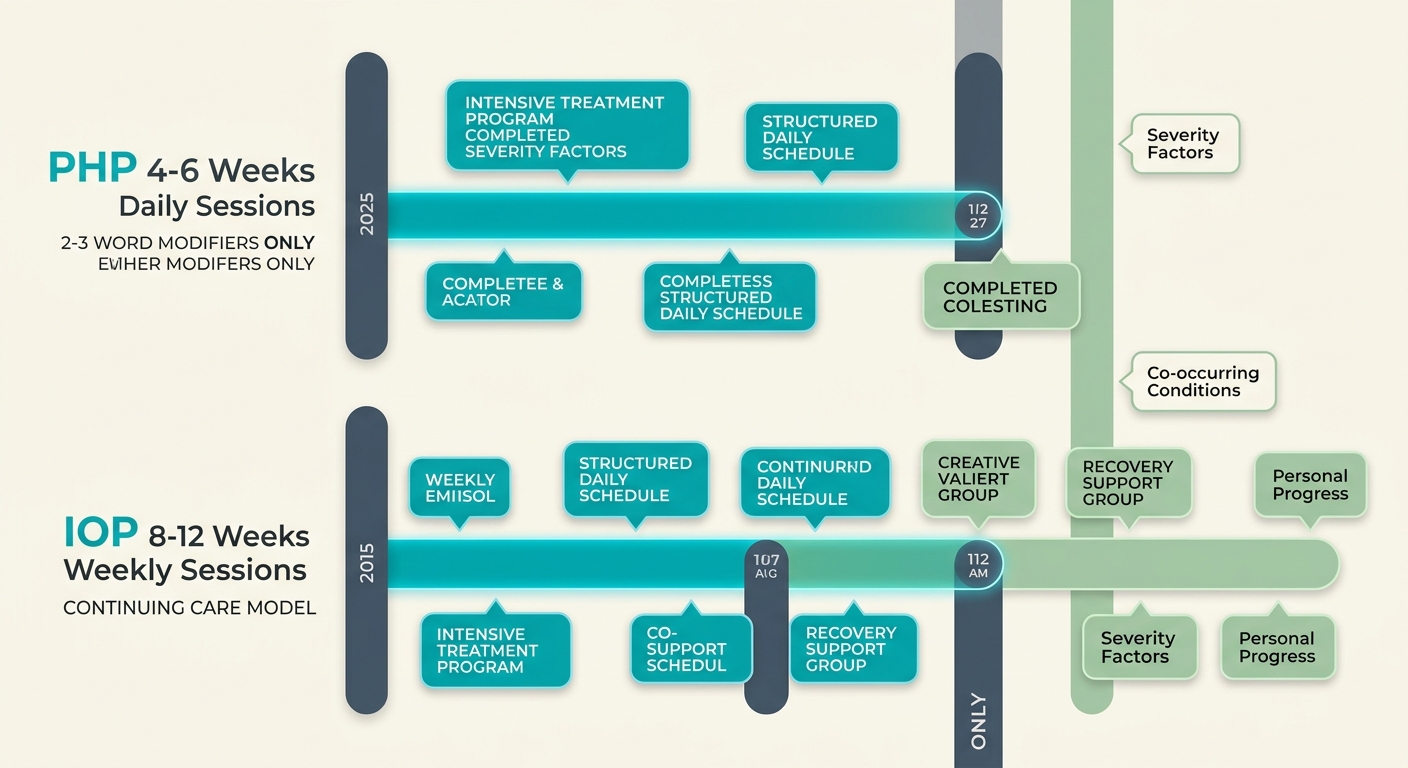
Typical durations for PHP and IOP rehab programs
The actual length of your stay in any Arlington rehab program is influenced by several personal factors, including the severity of substance use, the presence of any co-occurring mental health conditions, and your individual rate of progress. We follow evidence-based guidelines, and the Substance Abuse and Mental Health Services Administration (SAMHSA) notes that a minimum of 90 days in treatment is generally associated with more positive long-term outcomes. Ultimately, your program is adaptable; we adjust the schedule and intensity as you meet key clinical milestones, ensuring your path to recovery is both effective and sustainable. This means your treatment plan is truly your own, built on a foundation of personalized, professional care.
Because recovery is not a one-size-fits-all process, we encourage you to contact us for a personal assessment to create your plan. If you are exploring care beyond our immediate area, we also offer drug rehab in Everett WA. Take the first step to Get Help That Will Last; reach out today to learn how our programs can be tailored to your life and needs. Results vary by individual, and your specific program duration will be determined during your confidential clinical assessment.
Continuing Care and Family Support After Rehab
Completing a program for drug and alcohol rehab in Arlington WA marks a significant milestone, but the journey toward lasting sobriety truly extends far beyond the initial treatment phase. Once your primary treatment concludes, a structured continuing care plan becomes essential for safeguarding your progress. This aftercare provides a critical safety net, significantly reducing the risk of relapse by reinforcing coping skills and offering support during the transition back to daily life. Our philosophy is centered on providing the tools and community connections needed for a resilient, long-term recovery.
Family support is a powerful cornerstone of this ongoing process. According to the Substance Abuse and Mental Health Services Administration (SAMHSA), involving family in recovery through counseling and education consistently improves treatment outcomes and strengthens the entire support system. Healing fractured relationships and establishing healthy communication patterns at home creates a stable environment where your sobriety is nurtured. At arlington drug rehab, we actively integrate family programming into our care model because we understand that addiction impacts everyone, and recovery is a shared journey.
Building a robust aftercare plan often involves a combination of resources. Many individuals benefit from mutual-support groups like 12-step programs, SMART Recovery, or our own active alumni network. Connections to sober living environments and continued individual counseling are also vital. For anyone seeking additional guidance, SAMHSA’s National Helpline (1-800-662-4357) offers confidential, 24/7 referrals to local support services and is an authoritative federal resource for finding drug rehab arlington wa and recovery communities.
At Alpine Recovery Services, we ensure a seamless transition into lasting wellness through our alcohol rehab in Arlington WA and outpatient continuum, specifically our Partial Hospitalization and Intensive Outpatient programs. As a local provider since 1992, we tailor every continuing care plan to your unique life circumstances–whether you’re a working professional or reuniting with family–because effective aftercare is never one-size-fits-all. Our team is dedicated to connecting you with the php arlington wa services and community resources you need to truly Reclaim Your Life. Results may vary and individual outcomes are not guaranteed.
Still Have Questions? Let’s Talk
We hope this overview has helped clarify your options for personalized outpatient care. If you still have questions about drug and alcohol rehab in Arlington WA, our team is ready to provide clear, confidential answers. Since 1992, Alpine Recovery Services has helped adults in Snohomish County navigate PHP, IOP, and other evidence-based programs. Call us today for a free, no-obligation insurance verification. We accept most major insurance providers and answer every inquiry with compassion. Results may vary, and individual outcomes are not guaranteed. Contact us now for a confidential consultation.
Resources

Arlington
WA
98223